

science
Lutein and bilberries: What does the science say?
Lutein and bilberries are both often associated with nutrition for the eyes. But they are very different ingredients, and the research behind them tells two different stories.
Lutein is a carotenoid found naturally in foods such as green leafy vegetables, corn and egg yolk. The bilberry, Vaccinium myrtillus, is a dark blue berry with a long tradition in northern Europe, naturally rich in anthocyanins.
Both have attracted interest in research on nutrition and vision. Understanding what happens to these substances in the body — and what has actually been shown in human studies — makes it easier to separate scientific evidence from well-known ingredient stories.
What is lutein?
What makes lutein particularly interesting is not just where it comes from, but where it is found in the body.
Lutein concentrates selectively in the retina — especially in a small central area called the macula. Together with zeaxanthin and meso-zeaxanthin, it forms part of the macular pigment.¹
The macula is responsible for detailed central vision, and the selective presence of these carotenoids has made them an important field in nutrition and vision research.
Human studies have examined whether increased intake through diet or supplements can affect macular pigment optical density, MPOD. A systematic review and meta-analysis found that supplementation with lutein and zeaxanthin can increase macular pigment, with generally larger effects at higher intakes.¹
Macular pigment is a natural part of the healthy eye, concentrated in the central retina where detailed vision takes place. Its density has therefore become an important research area for understanding the link between nutrition and visual function.¹
The research on lutein rests on a well-established biological connection: lutein occurs naturally in the macula, and human studies show that dietary intake can affect macular pigment.¹ That provides an important scientific basis for understanding why lutein continues to be studied in eye nutrition.
What about bilberries?
The bilberry, Vaccinium myrtillus, has an entirely different story.
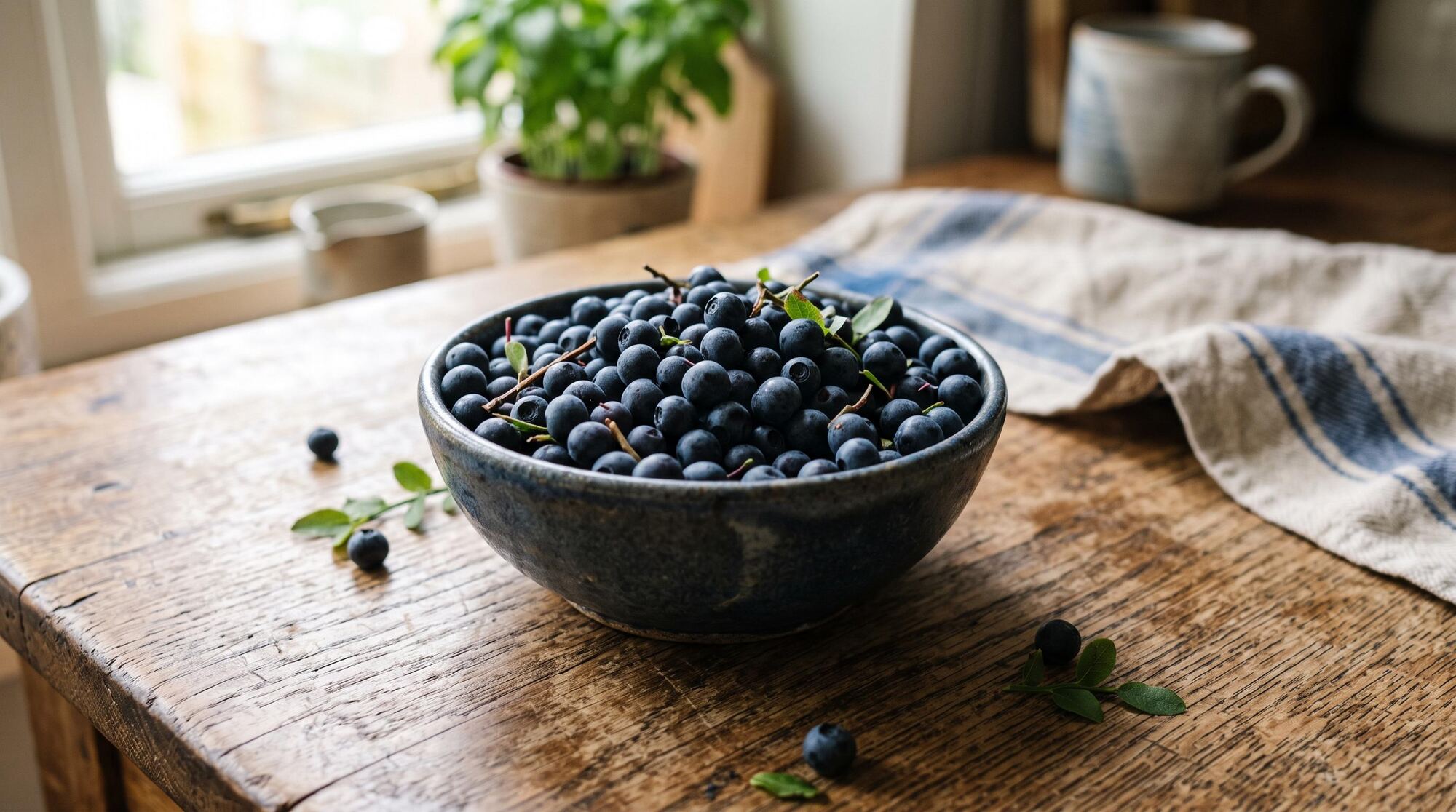
The dark blue berry holds a long-standing place in northern European food culture. It contains several naturally occurring substances, in particular anthocyanins — the pigments that give many plants their red, blue and purple colours.
Anthocyanins are not unique to bilberries. They are also found in foods such as blackcurrants, blackberries, blueberries, cherries, blue grapes and red cabbage.
Even so, bilberries have gained a particularly strong association with vision — above all with night vision.
One of the best-known stories dates back to the Second World War, when Royal Air Force pilots were said to eat bilberry jam to improve their night vision.
It is a memorable story. But a memorable story is not the same as scientific evidence.
A systematic review examined placebo-controlled studies of bilberries and night vision. The more rigorous, later studies did not support the idea that bilberries improve normal night vision in healthy people.²
That does not make the bilberry an uninteresting ingredient. It shows why traditional reputation and scientific evidence need to be assessed separately.
Lutein and bilberries offer a useful contrast. Lutein has a clear biological connection to the eye: it concentrates selectively in the macula, and human studies have shown that intake can affect macular pigment.¹
Bilberries have a long tradition of use and are naturally rich in anthocyanins — but some of their best-known associations with vision, including improved night vision, are not supported by rigorous clinical evidence.²
Understanding this difference is central to evidence-based nutrition: choosing ingredients not merely because they carry a familiar story, but because there is a scientific basis for including them.
Follow the evidence, not the trends.
References
- 1. Wilson LM, Tharmarajah S, Jia Y, Semba RD, Schaumberg DA, Robinson KA. The effect of lutein/zeaxanthin intake on human macular pigment optical density: a systematic review and meta-analysis. Advances in Nutrition. 2021;12(6):2244–2254.
- 2. Canter PH, Ernst E. Anthocyanosides of Vaccinium myrtillus (bilberry) for night vision: a systematic review of placebo-controlled trials. Survey of Ophthalmology. 2004;49(1):38–50.
Why does Omega-3 absorption matter?
Check more
What makes a good Omega-3 product for children?
Check more
newsletter