

science
What makes a good Omega-3 product for children?
A good supplement for children is not only about what it contains. Stability and the everyday experience matter too.

Why fish oil can develop an unpleasant taste and smell
Fish oil contains the long-chain Omega-3 fatty acids EPA and DHA. Because these fatty acids are highly unsaturated, they are particularly prone to oxidation.
As oxidation progresses, volatile compounds can form and contribute to unwanted taste and smell.¹ A fishy taste does not automatically mean the oil is oxidised, but oxidation can make its sensory characteristics more pronounced and less pleasant.
Omega-3 quality is therefore not only a question of how much EPA or DHA a product contains. Formulation, packaging and storage can also affect how well the oil is protected over time.
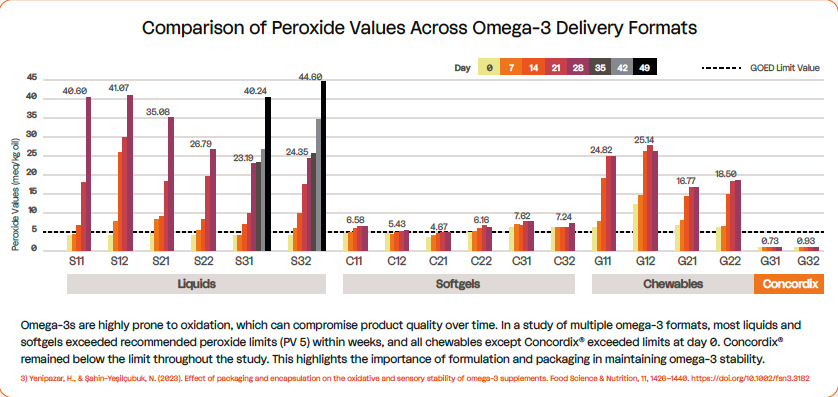
A published study compared the oxidative stability of different Omega-3 supplements during storage and found substantial differences between product formats and packaging.¹ The study used peroxide value as an indicator of primary oxidation.
Choosing daily nutrition for children
For children, the nutritional content is only part of the product experience.
Children experience a supplement through taste, smell, texture and aftertaste. Palatability and acceptance are therefore important considerations when developing products intended for children.²
Omega-3 supplements come in different forms — liquids, soft capsules, gummies and soft chews among them. Each format offers a different experience and may suit different ages, doses and daily routines.
The point is not to rank the formats, but to recognise that the delivery form is part of the overall product experience.
When choosing daily nutrition for children, it can therefore be worth looking beyond the front of the label.
Consider the nutritional purpose, an appropriate dose, the quality and stability of the formulation — and whether the format fits the child's age and daily routine.
Good nutrition for children should be scientifically thought through. But it also has to work in real life.
Made for everyday life.
References
- 1. Yenipazar H, Şahin Yeşilçubuk N. Effect of packaging and encapsulation on the oxidative and sensory stability of omega-3 supplements. Food Science & Nutrition. 2023;11:1426–1440.
- 2. European Medicines Agency. Guideline on pharmaceutical development of medicines for paediatric use. European Medicines Agency.

Lutein and bilberries: What does the science say?
Check more
Why does Omega-3 absorption matter?
Check more
newsletter